

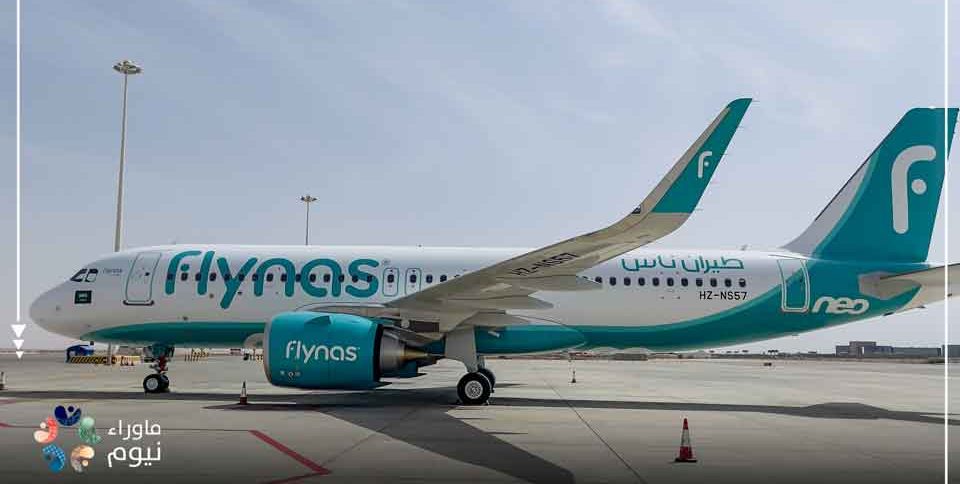
When Flynas — one of Saudi Arabia’s leading low-cost carriers — decided to go public in June 2025, the move was framed as a strategic leap cementing its place as a regional aviation giant. Promotional campaigns, glowing press releases, and promises of “sustainable growth” painted a picture of a company on the brink of a historic boom. But Q2 financials delivered a sobering reality check: net losses of SAR 862.5 million, compared to profits of SAR 238.8 million in Q2 2024, and a stark drop from SAR 147.86 million in Q1 2025.
A Billion-Riyal IPO, a Billion-Riyal Loss
The official reason given for the massive loss raised eyebrows: non-recurring expenses tied to the IPO, totalling SAR 1.083 billion — including SAR 981.9 million for an employee share-based payment program and SAR 101 million in listing fees. While the company insists these costs were shareholder-funded and had “no impact on operational performance,” the picture isn’t that simple for wary investors.
Aviation analyst Mazen Al-Balushi noted, “Listing an airline on an emerging market requires exceptional cost discipline. When IPO expenses alone surpass SAR 1 billion, it signals either poor financial planning or a prioritisation of internal interests over shareholder value.”
Operational Challenges Go Beyond One-Off Costs
Even excluding IPO costs, adjusted net profit for Q2 stood at SAR 190.7 million — down 2.5% from last year. Revenue dipped 1.5% to SAR 2.1 billion, blamed on “early suspension of Umrah and visitor visas ahead of Hajj season” and “regional instability.”
This reveals deeper operational issues than a one-off accounting hit.
A Risky Reliance on Religious Seasons
Flynas’s struggles expose a fundamental strategic vulnerability: overdependence on Hajj and Umrah seasons. This leaves the airline hostage to political and security volatility. With mounting regional tensions and unpredictable regulations, its business model resembles a gamble more than a sustainable venture.
Dr. Laila Al-Saqqaf, an economics professor at Kuwait University, remarked: “Successful low-cost airlines diversify revenue across domestic, regional, and international routes and adopt flexible pricing models. Flynas remains locked within the Saudi market and religious tourism cycles, limiting its resilience to shocks.”
Managing the PR Before Managing the Risk
Flynas insists its losses are “exceptional” and operations remain unaffected. But markets respond to numbers, not narratives. While the company polishes its image as a symbol of Saudi aviation success, it ignores the urgent need to reform its business model, increase operational flexibility, and rethink spending structures.
The case resembles other regional IPOs that focus more on dazzling the public and sending political signals than on sound financial foundations.
Heavy Burdens Post-IPO
The company posted SAR 714.65 million in losses for H1 2025 — a collapse from SAR 388.01 million in profits during H1 2024. This casts a shadow over the outlook for newly onboarded investors. Competition in the Gulf aviation sector is fierce, with stronger regional and global players entering the market. Rising fuel prices and geopolitical shocks are also squeezing margins.
If Flynas fails to restore investor confidence through a strong H2 performance, it may trigger a sell-off that drives down share prices and derails expansion plans.
A Wake-Up Call for Saudi Financial Markets
The Flynas saga sends a clear message to Saudi Arabia’s Capital Market Authority: IPO success should not be measured by media buzz or oversubscription rates, but by long-term shareholder value.
Economist Ahmed Al-Marri summed it up: “If major IPOs keep turning into post-listing losses, the message to global investors will be negative — no matter how powerful the PR spin. Confidence isn’t bought with hype. It’s earned through results.”
Seasonal Profits in a Shaky Economy
Flynas’s case cannot be separated from Saudi Arabia’s broader economic picture. With oil prices dipping and megaproject costs ballooning, Saudi companies are under growing pressure to protect profits in an ultra-competitive market.
Against this backdrop, Flynas’s losses offer a stark warning: IPOs marketed as success stories can quickly become burdens if not backed by long-term vision and crisis resilience.