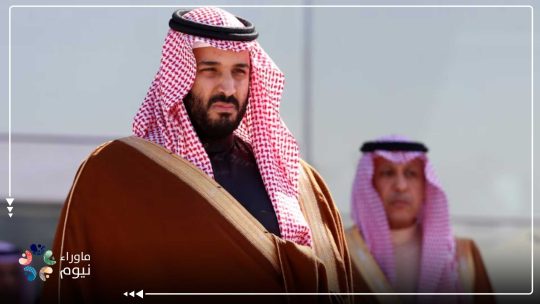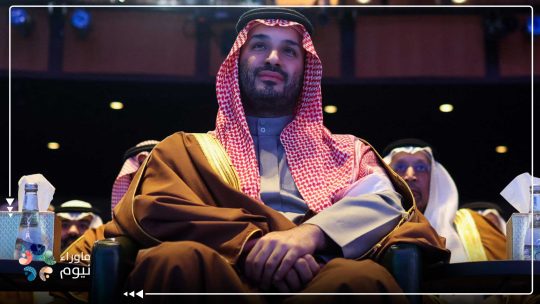


According to Spanish journalist Francisco Cayardo, Mohammed bin Salman is preparing an offer of up to €10 billion to acquire FC Barcelona—one of the largest proposed takeovers in football history. The timing is not accidental. It comes as the Catalan club suffocates under debts exceeding €2.5 billion, struggling to meet basic financial obligations and desperately searching for liquidity. What is being presented as a “historic investment opportunity” is, in reality, a financial rescue operation—Saudi money deployed not to build a sustainable sporting project, but to plug holes created by years of reckless management and financial collapse.
Seen through this lens, the move adds nothing to global football. It follows a familiar Saudi pattern: using sport as a vehicle to absorb distressed assets, project purchasing power, and manufacture an image of strength, while fundamental questions about governance, accountability, and long-term viability remain deliberately unanswered.
A Club Crushed by Debt, and Money Searching for a Legitimate Gateway
Barcelona’s crisis is no secret. Years of catastrophic leadership, inflated contracts, and gambling on success that never materialised have left the club chasing cash rather than trophies. In this context, the Saudi offer—regardless of its scale—becomes not just tempting, but coercive. It arrives at a moment of historic weakness.
This is not the acquisition of a promising venture. It is the purchase of a club on life support.
Injecting billions does not resolve the structural roots of Barcelona’s crisis. It merely postpones them. Without radical reform of governance and financial discipline, Saudi capital would simply replace European creditors with a single political patron—one capable of imposing conditions later. The club risks sliding from member-owned institution into a strategic asset tied to the will of an external sovereign fund, regardless of how carefully the deal is packaged in the language of “investment” or “partnership.”
Sportswashing by Design: Football as a Tool, Not a Purpose
The Barcelona bid is not an isolated development. It fits seamlessly into Saudi Arabia’s broader obsession with buying symbols rather than building systems. Domestically, the Kingdom faces mounting economic pressure: persistent deficits, asset sales, rising debt, and grim fiscal forecasts. Internationally, however, spending on football, boxing, Formula One, and mega-events continues as if financial gravity does not apply.
Acquiring a club of Barcelona’s stature would deliver what no number of conferences or PR campaigns could: symbolic legitimacy, constant exposure in European media, and soft cultural normalisation with global fanbases. Human rights abuses, repression, and economic fragility fade into the background, replaced by headlines about a “bold sporting vision” and a “historic rescue.”
Football, once again, becomes a laundering mechanism—not an investment in the game, but a shield against scrutiny.
Barcelona’s Identity at Risk: From “More Than a Club” to a Tradable Asset
For decades, Barcelona has marketed itself as més que un club—a symbol of Catalan identity, internal democracy, and social meaning anchored in its member-owned structure. The entry of a foreign sovereign fund on this scale threatens that identity at its core. Even if slogans survive, decision-making power inevitably shifts when the club’s financial future becomes dependent on a single external backer.
The danger lies not only in ownership change, but in functional transformation. The club risks becoming a promotional platform, a public-relations vehicle, and a node within a broader influence strategy. Over time, compromises become easier to justify: a friendly here, a campaign there, silence on sensitive issues—because “the sponsor does not like noise.”
A Club for Sale, and a Meaning Hollowed Out
The “Saudi Barcelona” question is ultimately not about football. It is about a global moment where financial desperation collides with a crisis of values. When a debt-ridden historic club is offered a staggering sum, the real question is not whether the deal can happen, but what remains of the club afterwards.
Money can settle debts.
It cannot buy identity.
And it rarely preserves meaning.
If Barcelona becomes a refuge for political liquidity seeking legitimacy, the winners will not be the club or its supporters, but a new model of football—one governed by cheques instead of principles and valued by its financiers rather than by what it represents.