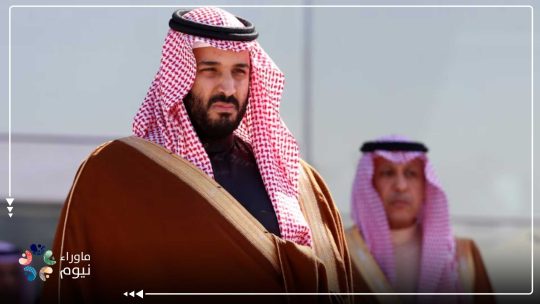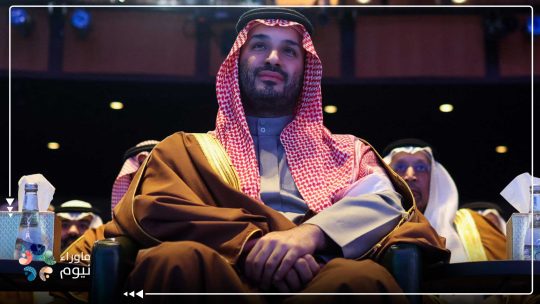


The murder of Jamal Khashoggi is no longer merely a diplomatic scandal that faded with time or a political crisis Mohammed bin Salman managed to bury beneath arms deals, global investments, entertainment campaigns, and sports diplomacy. France’s decision to open a new judicial investigation against the Saudi crown prince has thrust the case back onto the international stage through its most dangerous gateway yet: transnational criminal justice.
For years, Riyadh attempted to suffocate the case under an avalanche of public relations campaigns, mega-projects, sporting acquisitions, and diplomatic rehabilitation efforts. Yet Khashoggi’s name has once again returned to haunt the Saudi leadership — this time inside European courtrooms.
What makes this development particularly serious is that the matter has now moved beyond political statements, media pressure, or temporary diplomatic outrage. The investigation will reportedly be handled by a judge specializing in torture, enforced disappearance, and crimes against humanity — transforming the case from a political controversy into a long-term judicial process that could reopen global scrutiny over one of the most shocking political assassinations of the modern era.
For the Saudi leadership, the timing could hardly be worse. Mohammed bin Salman has spent recent years aggressively rebranding himself as a reformist leader and indispensable global economic partner. Yet the reopening of the Khashoggi file in France — one of Saudi Arabia’s key European allies — exposes how the image of the “new Saudi Arabia” remains unable to erase the legacy of the 2018 killing inside the Saudi consulate in Istanbul.
Delayed Justice Returns to the International Stage
The French move reveals a critical reality Riyadh has tried for years to obscure: the Khashoggi case was never truly closed internationally.
Despite billions spent on global image rehabilitation, sportswashing campaigns, entertainment diplomacy, and Western partnerships, the case remained alive within international media, human rights organizations, and legal institutions. The renewed judicial effort is the product of years of pressure from journalists, activists, and rights groups who argued that Saudi Arabia’s internal proceedings were never genuine accountability mechanisms, but rather controlled efforts designed to contain political damage while shielding senior officials from scrutiny.
The significance of the French investigation lies in its legal framing. Allegations linked to torture and enforced disappearance place the case within categories usually associated with systematic state abuses and crimes carrying international legal implications. By involving judicial bodies focused on crimes against humanity, the investigation elevates the matter far beyond the killing of a dissident journalist.
For the Saudi state, the danger is no longer limited to reputational damage. The case increasingly symbolizes broader accusations regarding the nature of political power in Saudi Arabia itself — including questions surrounding repression, extraterritorial intimidation, judicial independence, and the treatment of dissent.
The reopening of the file also arrives at a moment when Riyadh has worked intensely to normalize Mohammed bin Salman’s position within Western capitals after years of diplomatic isolation following the assassination. France’s move sends a clear message that political rehabilitation has not erased the legal and moral questions surrounding the case.
The Collapse of the “Reform” Narrative
Over the past several years, Saudi Arabia has spent extraordinary sums attempting to reconstruct its global image. Sports acquisitions, entertainment festivals, tourism campaigns, technology partnerships, media investments, and international summits have all formed part of a broader strategy aimed at rebranding the kingdom as modern, dynamic, and globally integrated.
Yet the Khashoggi case has remained the regime’s deepest vulnerability.
Unlike ordinary human rights controversies, the murder became an international symbol of transnational authoritarianism — the image of a journalist murdered inside a diplomatic mission by agents linked to the state itself. That symbolism has proven impossible to erase through money alone.
The French investigation demonstrates that financial influence cannot permanently bury major political crimes. While Western governments have largely resumed pragmatic engagement with Mohammed bin Salman, many judicial institutions, civil society organizations, and international media outlets continue treating the case as an unresolved stain on the kingdom’s image.
The timing is especially damaging because Saudi Arabia simultaneously seeks to market itself as a global center for tourism, investment, sports, and international events. The contradiction is impossible to ignore: how can a state seeking to host global expos, World Cup tournaments, and entertainment spectacles simultaneously face judicial investigations tied to torture, enforced disappearance, and the murder of a journalist inside one of its own diplomatic facilities?
This contradiction reflects the core crisis facing Mohammed bin Salman’s project itself: the attempt to combine economic openness with total political closure. Saudi Arabia seeks foreign capital, global partnerships, and international legitimacy while continuing to suppress independent journalism, activism, and dissent at home.
That makes every carefully constructed public relations success fundamentally fragile — vulnerable to collapse whenever another human rights crisis emerges.
Khashoggi Remains Politically Alive
What most troubles Riyadh is that Khashoggi never became a “closed chapter.”
Every time Mohammed bin Salman attempts to reposition himself internationally, the murder resurfaces — whether through media coverage, human rights advocacy, or now judicial action. The Saudi strategy of attempting to “buy forgetting” through investments and global partnerships has clearly failed to fully erase the case from international consciousness.
Governments may have restored relations with Riyadh for strategic and economic reasons, but a significant network of journalists, activists, legal institutions, and civil society actors continues treating the case as unresolved.
The French investigation could also encourage similar legal initiatives elsewhere in Europe, especially if new evidence or testimony emerges. That possibility explains Riyadh’s extreme sensitivity toward any foreign judicial process connected to Khashoggi. The fear is no longer simply about reputational damage — it is about creating international legal precedents that could one day expose Saudi officials to broader accountability mechanisms.
The case also exposes the limits of Saudi financial and political influence. Despite enormous investments, strategic partnerships, and diplomatic leverage, some Western institutions remain willing to revisit the most damaging chapter associated with Mohammed bin Salman’s rise to power.
The Crime the World Refused to Forget
What is happening today in France is not merely another legal development. It is a profound political and judicial message: Jamal Khashoggi’s murder never became history, despite Saudi Arabia’s efforts to bury it beneath mega-projects, entertainment diplomacy, and global branding campaigns.
Saudi Arabia may build futuristic cities, purchase international sports tournaments, organize massive entertainment events, and sign deals worth hundreds of billions of dollars. But it still cannot escape the shadow of the crime that exposed the true face of power when confronted by an independent dissident voice.
Ultimately, Khashoggi’s name appears destined to continue haunting Mohammed bin Salman’s international project no matter how aggressively the Saudi state attempts to move forward through investments, propaganda, and spectacle.
Because some crimes do not disappear through political normalization.
And some stains cannot simply be buried beneath money.