
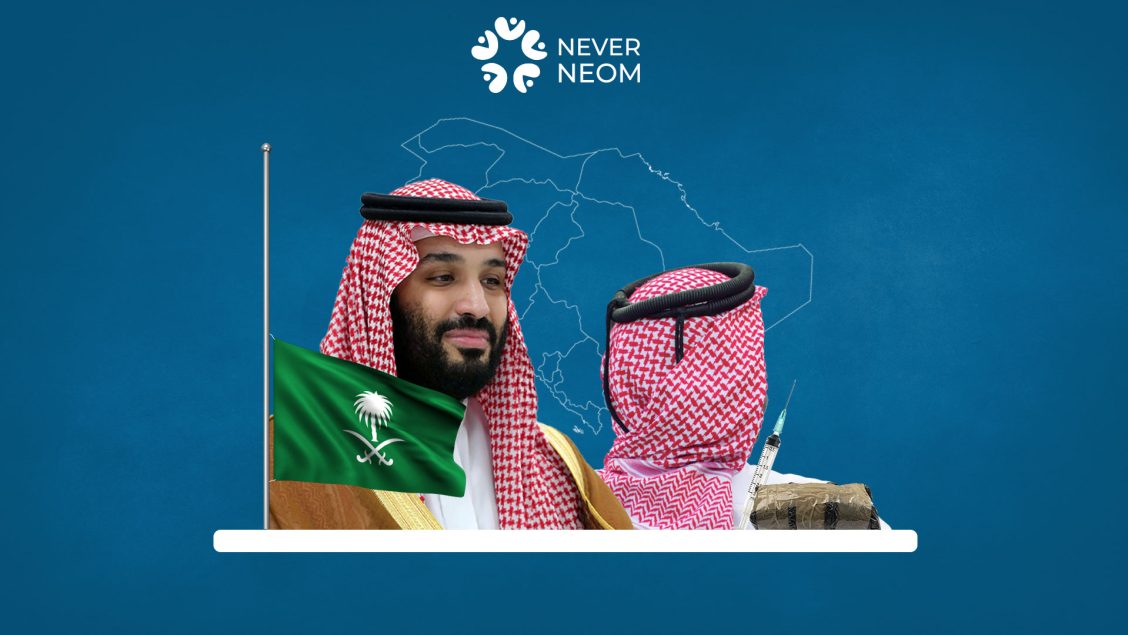
Hardly a day passes without Saudi Arabia announcing the arrest of people accused of trying to smuggle large quantities of drugs into the Kingdom. Thus, Saudi Arabia has become one of the largest and most lucrative regional destinations for drug abuse, and that status is only intensifying.
However, only “small promoters” such as Pakistanis, Indians, Syrians, and Yemenis are prosecuted, while their Saudi partners, especially those who belong to the ruling family, are rarely held accountable.
It is obvious that Crown Prince Mohammed bin Salman (MBS) cannot open new fronts against other royal members in addition to the ones he has waged since he took office.
In 2015, the Lebanese authorities arrested the Saudi prince Abdul Mohsin bin Walid bin Abdulaziz Al-Saud, mostly known as the Captagon Prince, for attempting to smuggle nearly two tons of Captagon from Lebanon to the kingdom. At that time, the Saudi authorities exerted great pressure for his release.
This is not the first case where a member of the Saudi royal family has been involved in a drug smuggling attempt. In 1999, Prince Nayef bin Sultan bin Fawaz Al-Shaalan Al Saud was accused of smuggling two tons of cocaine from Venezuela to France.
However, he was able to return to his country, despite being accused in France of using his diplomatic position to smuggle drugs on a plane belonging to the ruling family. In 2007, he was sentenced in absentia to ten years in prison.
In December 2017, Prince Youssef bin Saud, who is the forty-second son of the late King Saud bin Abdulaziz, was arrested at Beirut airport for possessing a smaller quantity of drugs for personal use. He was later released after a high level intervention.
International experts have accused MBS of contributing to the drug spread in the Kingdom over the past years.
MBS has pushed the Saudi youth to drug addiction in light of the high unemployment rates and the new modernism wave he launched since he came in power.
Based on estimates of the US National Center for Biotechnology Information, around 7 to 8% of Saudis report having used drugs.
The Kingdom ranked third in the world drug market in 2019, while it ranked fourth in 2020 following the US, Mexico and Thailand, becoming the drug capital of the Middle East.
Regular reports by member states to the United Nations Office on Drugs and Crime show that between 2015 and 2019 45% of the quantities of Captagon confiscated around the world were siezed in Saudi Arabia.
According to Western reports, the Saudi Arabia is becoming the drug capital of the Middle East, driving demand and becoming the primary destination for smugglers from Syria and Lebanon.
The widespread youth unemployment has led to the unprecedented rates of drug use, crime, and violence in the Kingdom.
Based on estimates of the General Authority for Statistics’ (GASTAT) Labor Force Survey, the unemployment rate among Saudis was 10.1% in the first quarter (Q1) of 2022.