

Saudi Arabia’s financial crisis is no longer a temporary imbalance buried inside quarterly reports. It has evolved into a structural emergency exposing the scale of economic distortion created under Mohammed bin Salman’s so-called “Vision 2030.” The first-quarter figures for 2026 paint a far darker picture than the Saudi regime’s propaganda machine is willing to admit: ballooning deficits, debt expanding at an unprecedented pace, liquidity inside the Public Investment Fund deteriorating, and a state apparatus that continues spending as if its coffers were infinite.
In just three months, the Saudi regime spent nearly 386 billion riyals while generating revenues of barely 260 billion riyals, producing a deficit approaching 126 billion riyals in a single quarter alone. This is not a routine accounting gap. It is a direct signal that Mohammed bin Salman’s economic model has entered a dangerous phase in which the state increasingly relies on borrowing simply to maintain the illusion of an “economic transformation.”
The collapse is particularly striking because it comes after years of relentless rhetoric about diversification and reducing dependence on oil. Yet the numbers reveal the exact opposite. The Saudi economy has become more vulnerable to oil fluctuations, more dependent on debt, and more trapped inside megaprojects consuming hundreds of billions without producing sustainable returns.
“Debt Is Swallowing the State” From Oil Wealth to a Borrowed Economy
The most alarming aspect of the current crisis is not merely the size of the deficit, but the radical transformation in how the Saudi regime manages public finances. For decades, Saudi Arabia boasted about maintaining low public debt. Today, it has become one of the largest borrowers among emerging markets.
Public debt surged from roughly 142 billion riyals in 2015 to more than 1.1 trillion riyals in less than a decade — an increase of nearly 784%. This staggering escalation marks a historic shift from an oil-surplus economy to one sustained by continuous borrowing.
Even more dangerously, external debt alone has climbed to nearly 450 billion riyals, leaving the Saudi economy increasingly exposed to international markets, global interest rates, and rising financing costs. Any decline in investor confidence or increase in borrowing expenses could dramatically intensify pressure on the state budget.
The deeper problem is where this borrowed money is going. These loans are not financing a productive industrial transformation or a diversified economic base. They are being poured into long-term vanity projects whose economic returns remain uncertain, delayed, or entirely speculative.
“NEOM Is Devouring the Treasury” Megaprojects Without Returns
Since the launch of “Vision 2030,” the Saudi regime has marketed megaprojects as gateways to the future. Years later, these projects are increasingly becoming financial burdens threatening the stability of the state budget itself.
NEOM alone requires hundreds of billions of dollars while major parts of the project continue facing delays, downsizing, and repeated restructuring. The Line, once presented as the futuristic city that would redefine urban living, has instead become a global symbol of excess and waste after tens of billions were spent on incomplete infrastructure and stalled construction zones.
These projects were never designed according to realistic economic logic. They were designed according to spectacle, shock value, and image engineering. The result is that the Saudi regime now finds itself financing projects incapable of generating fast or stable returns while deficits widen and liquidity shrinks.
The numbers surrounding Public Investment Fund reveal the scale of the problem with alarming clarity. Despite managing assets estimated at nearly $778 billion, the fund’s available liquidity reportedly dropped to around $15 billion — an extraordinarily low figure for an institution supposedly leading the kingdom’s economic transformation.
This creates a dangerous equation: asset-rich, cash-poor. And for projects entirely dependent on continuous capital injections, that imbalance becomes a structural threat.
“Oil Exposes the Illusion” Where Is the Economic Diversification?
Perhaps the greatest contradiction exposed by the current crisis is that, nearly a decade after the launch of “Vision 2030,” the Saudi economy remains hostage to oil more than ever.
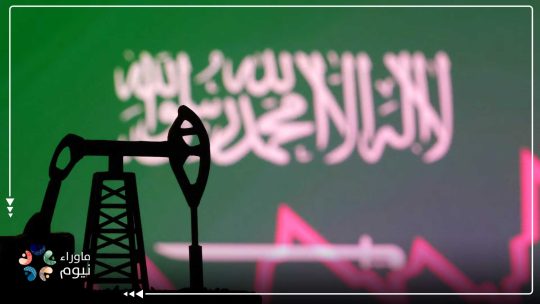
When the Saudi regime cut oil production beginning in late 2022 in an attempt to support global prices, oil revenues declined sharply. Yet government spending barely slowed. That mismatch detonated the current deficit crisis.
Had diversification genuinely succeeded, fluctuations in oil markets would not have been capable of producing such severe financial instability. But the reality is that non-oil sectors have failed to generate sustainable income streams capable of supporting the kingdom’s enormous spending machine.
Foreign investment — one of the central pillars of the “Vision 2030” narrative — has also fallen far below expectations. International investors continue approaching the Saudi market cautiously due to political risks, regulatory uncertainty, and growing concerns over untested megaprojects consuming massive amounts of capital.
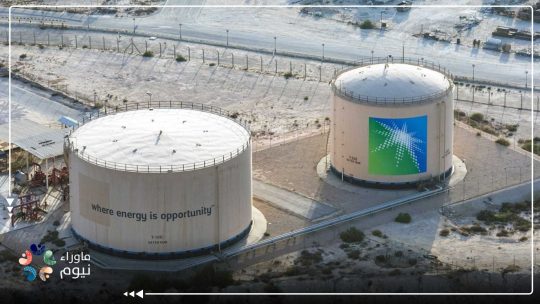
Attempts to sell state assets, including additional offerings of shares in Saudi Aramco, have also failed to produce the financial breakthrough the Saudi regime anticipated. The widening gap between projections and actual results has exposed the limits of relying on sovereign assets to sustain endless spending.
“An Economy Running on Painkillers” Deficits Become Permanent
The most dangerous development is that the deficit is no longer a temporary condition tied to exceptional circumstances. It has become embedded within the economic model itself.
The Saudi regime continues borrowing. The sovereign wealth fund continues injecting money. Megaprojects continue consuming resources. Yet revenues are not growing at the same pace.
This means the Saudi economy has entered a phase of crisis management rather than sustainable development. Every new “solution” depends on more borrowing, more asset sales, or delaying projects — without addressing the root problem: reckless spending on poorly calculated projects designed for political spectacle rather than economic sustainability.
Financial analysts have already begun warning about the long-term consequences for Saudi Arabia’s credit rating and investor confidence. With global financing costs rising, maintaining this level of borrowing may eventually become a burden too heavy to contain.
“Vision 2030 Is Being Financed by Debt” MBS Turns Saudi Arabia’s Future Into a Financial Gamble
What the first-quarter figures of 2026 expose is not simply a budget crisis. They expose the gradual collapse of the economic model Mohammed bin Salman attempted to market to the world as a revolutionary transformation.
After years of promises, the Saudi regime is drowning in debt, deficits are widening at an alarming pace, megaprojects are consuming billions without clear returns, and oil remains the only real mechanism preventing total financial imbalance.
The reality can no longer be hidden: “Vision 2030” did not build an independent economy. It produced an economy more dependent on borrowing, more vulnerable to crises, and more fragile beneath the surface of carefully engineered propaganda.
Every new deficit figure reveals the same truth: what is happening is not a historic economic transformation, but an enormous gamble with Saudi Arabia’s wealth and future — managed through the mentality of spectacle and unchecked spending rather than sustainability, accountability, or economic realism.