

After years of grand promises about a “new Saudi Arabia” and the transformation envisioned under Vision 2030, the contradictions inside the kingdom are becoming impossible to conceal. While hundreds of billions of dollars continue to pour into futuristic cities, sports acquisitions, entertainment spectacles, and foreign investments, a very different reality is unfolding at home: rising unemployment, mounting living costs, shrinking purchasing power, and a growing sense that the middle class is being steadily eroded.
The Saudi state no longer resembles the image of an unstoppable economic success story projected by official media. Instead, it increasingly appears as a country accumulating economic, social, and political pressures at a dangerous pace while attempting to mask this instability through aggressive propaganda, global branding campaigns, and an expanding security apparatus.
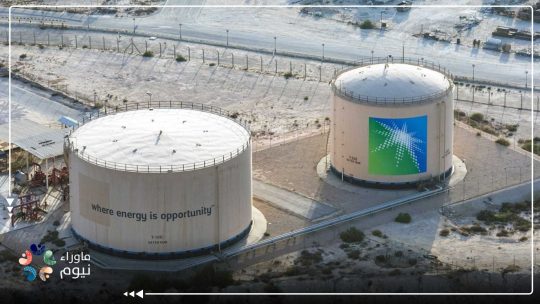
The deeper contradiction is that the same leadership that promised to transform Saudi Arabia into a modern, diversified economic powerhouse now faces growing public skepticism about the very foundations of its policies. Nearly a decade after the launch of Vision 2030, oil remains the backbone of the economy, public debt continues to rise, budget deficits are widening, and ordinary Saudis are carrying the burden through taxes, fees, and declining living standards.
Meanwhile, many of the kingdom’s mega-projects increasingly resemble giant publicity exercises rather than practical solutions to the structural problems facing Saudi society.
What makes the situation more dangerous is that the crisis is no longer purely economic. It is becoming a broader crisis of trust between the state and society. Citizens watching billions spent on boxing matches, gaming deals, entertainment festivals, and futuristic desert cities while struggling with daily economic pressures are no longer easily convinced by the endless rhetoric of “historic transformation.”
An Economy That Exhausts Its Own Population
One of the clearest contradictions in today’s Saudi Arabia is that a country that generated enormous oil revenues over recent years is simultaneously experiencing growing domestic financial pressure.
Rather than translating oil wealth into meaningful improvements in living conditions, massive state resources have been redirected toward extravagant projects designed to reshape the kingdom’s international image. The result is an economic model where ordinary citizens increasingly feel they are financing the so-called reforms themselves through higher taxes, rising utility costs, reduced subsidies, and growing living expenses.
Vision 2030 was presented as a strategy to reduce dependence on oil, but in practice it has created a different and potentially more dangerous dependency — one built around massive government spending, public borrowing, and high-risk prestige projects.
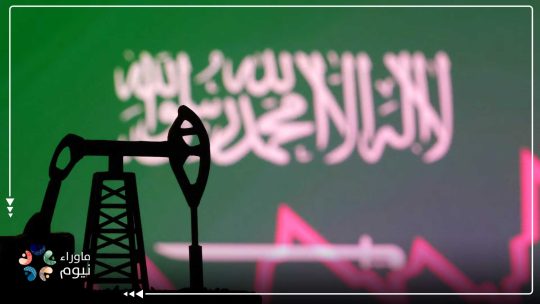
Every decline in oil prices or escalation in regional tensions immediately exposes the fragility of this model.
The issue is no longer simply unemployment or inflation. A growing number of Saudis increasingly view the government’s priorities as detached from their actual needs. While many young people search for stable jobs and affordable living conditions, the state continues spending billions on global entertainment ventures, sports diplomacy, and international image-building campaigns.
This explains why discussions about unemployment, poverty, taxes, and economic hardship have become increasingly sensitive topics online. Criticism of living conditions is no longer treated merely as economic debate — it is viewed as a direct challenge to the official narrative portraying Saudi Arabia as a global model of modernization and success.
The result is a government trapped between an economy placing growing pressure on society and a propaganda machine that can no longer fully conceal the widening gap between billion-dollar mega-projects and the daily reality experienced by ordinary citizens.
Entertainment and Repression: The Two Faces of the New Saudi Arabia
As domestic pressures intensify, the Saudi leadership has increasingly relied on security control and media domination rather than meaningful reform.
Instead of opening genuine public debate about rising living costs, unemployment, or policy failures, criticism is increasingly framed as a threat to public order or national security.
Saudi media outlets have effectively become extensions of the state narrative, while independent voices face intimidation, imprisonment, censorship, or exclusion. At the same time, arrests, lengthy prison sentences, and executions have expanded significantly in recent years, reflecting a system that increasingly sees security repression as its primary method for managing internal tensions.
The contradiction is striking. The same government that constantly promotes the image of a “modern” and “open” Saudi Arabia remains deeply intolerant of genuine political or social criticism. A country hosting global concerts, film festivals, and international sporting events continues imprisoning activists, writers, and social media users for comments criticizing economic conditions or government policy.
This exposes the reality behind the kingdom’s so-called openness: it is not political or social liberalization, but a controlled consumer and entertainment-driven opening designed to serve the regime’s image and economic interests while politics, rights, and freedoms remain under strict control.
Far from creating long-term stability, this environment risks deepening internal frustration. Suppressing public discussion does not solve economic or social problems — it merely pushes them beneath the surface until they become more difficult to contain.
Foreign Policy Burned Through Billions
Regionally, Saudi Arabia also appears to be paying the price for years of costly and inconsistent foreign policy decisions.
The war in Yemen evolved from an ambitious attempt to reshape regional dynamics into a prolonged financial, military, and political drain that ended without delivering the decisive victory initially promised. The billions spent there failed to secure strategic success while simultaneously damaging Saudi Arabia’s international reputation through mounting criticism over human rights abuses and civilian casualties.
At the same time, Saudi Arabia’s regional relationships have become increasingly complicated amid shifting alliances, geopolitical rivalries, and rapidly changing international dynamics.
Rather than addressing these deeper problems, the leadership attempted to compensate through soft-power campaigns involving entertainment, sports investments, media partnerships, and global branding initiatives — as though image management could substitute for genuine political or economic achievements.
But reality increasingly points in the opposite direction: a state spending enormous sums to appear powerful, modern, and stable while deeper economic, social, and political pressures continue to accumulate internally.
A Shiny Exterior Covering Internal Decay
What is unfolding inside Saudi Arabia is no longer about isolated failed projects or individual policy mistakes. It reflects a deeper crisis tied to the entire governing model built over recent years — a model centered on massive spending, image management, centralized power, and security control while lacking meaningful political reform, social balance, or sustainable economic foundations.
The government has succeeded in building a loud and globally visible image filled with festivals, sports spectacles, futuristic projects, and luxury developments. But it has not succeeded in building widespread public confidence that these transformations genuinely serve society itself.
For a time, the state may continue managing tensions through money, propaganda, and repression. But it cannot permanently escape a basic reality: political and economic projects lose stability when their external image becomes stronger than their internal foundations.
Countries are not ultimately measured by the number of concerts they host, the towers they build, or the sporting events they buy. They are measured by their ability to provide stable, fair, and sustainable lives for their populations.
And that is precisely where Saudi Arabia increasingly appears most vulnerable today — no matter how brightly the skyline glitters.