

Saudi Arabia’s financial position has entered a far more dangerous phase after the Ministry of Finance announced a budget deficit of 125.7 billion riyals ($33.5 billion), marking the kingdom’s largest fiscal gap since 2018. Far from being a temporary downturn, the figures expose a deeper structural crisis tied to years of aggressive spending, mega-project overexpansion, and an economic model that remains heavily dependent on oil despite nearly a decade of promises about diversification under Mohammed bin Salman’s Vision 2030.
According to figures highlighted by Bloomberg, the new deficit comes only months after Saudi Arabia recorded a 95 billion riyal shortfall in the final quarter of 2025 — more than double the deficit posted during the same period a year earlier. The scale and speed of the deterioration suggest that fiscal pressure is no longer an exceptional circumstance caused by temporary market fluctuations, but an increasingly permanent feature of the Saudi economy.
The latest numbers directly undermine the central promise behind Vision 2030: that Saudi Arabia would gradually free itself from oil dependency and create a self-sustaining diversified economy. Instead, the kingdom now finds itself trapped between falling energy revenues, escalating debt, and enormous spending commitments tied to projects that continue to consume public funds without generating proportional returns.
Vision 2030 Turns Into a Financial Drain
Since the launch of Vision 2030 in 2016, the Saudi government has poured hundreds of billions of dollars into massive projects marketed as symbols of a new economic era. From NEOM and “The Line” to entertainment cities, sports acquisitions, and global image-building campaigns, the kingdom pursued expansion on a scale rarely seen in modern economic planning.
But the model depended heavily on one assumption: that oil revenues and state borrowing would continue to finance unlimited spending.
As oil prices weakened and regional tensions intensified, the financial cracks began widening rapidly. Many of the projects promoted as pillars of economic transformation became long-term liabilities burdening the state budget, especially as delays, scaling-back decisions, and rising costs continued to mount.
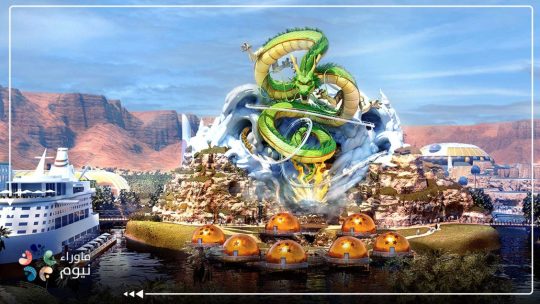
Despite repeated official rhetoric about “efficiency” and “spending discipline,” the government continued pouring money into high-risk ventures with uncertain economic returns. Billions were spent on costly sports ventures such as LIV Golf, entertainment partnerships, gaming investments, and international branding campaigns at a time when debt levels and budget deficits were already rising sharply.
The result is an economic model increasingly driven by spectacle rather than sustainable financial planning.
Oil Dependency Remains the Core Problem
One of Vision 2030’s central slogans was reducing Saudi Arabia’s reliance on oil. Yet the latest deficit figures demonstrate how little has fundamentally changed.
When oil prices surged in 2021 and 2022, the kingdom experienced a temporary financial boom that encouraged even greater expansion in spending and project announcements. But as prices stabilized and geopolitical risks increased, the fragility of the model quickly resurfaced.
Saudi Arabia still relies overwhelmingly on energy revenues to finance state spending. Any disruption in oil markets immediately affects the national budget — exactly what happened amid the US-Israeli confrontation with Iran and broader tensions across the Gulf region, which raised export and energy security concerns.
The current deficit exposes the reality behind the diversification narrative: despite years of reforms and publicity campaigns, the Saudi economy still depends fundamentally on oil to sustain government spending, forcing the kingdom back into cycles of borrowing and fiscal imbalance whenever revenues decline.
Debt Continues to Surge
The crisis extends beyond the deficit itself. Saudi Arabia has dramatically increased borrowing over recent years, with public debt approaching $400 billion according to multiple economic estimates and international financial reports.
This means the state is no longer financing its ambitions primarily through oil surpluses, but increasingly through debt accumulation. As borrowing rises, debt servicing itself becomes an additional burden on public finances.
What makes the situation more alarming is the apparent absence of any major shift in economic direction. Instead of fundamentally reassessing the model built around mega-projects and high-profile international investments, the leadership continues prioritizing geopolitical branding and prestige-driven spending.
The consequence is a dangerous cycle: growing deficits, expanding debt, and projects that fail to generate enough revenue to justify their enormous costs.
An Economy Running on Financial Painkillers
What the latest deficit figures reveal is not merely a temporary fiscal problem, but the gradual unraveling of the entire economic narrative behind Vision 2030.
After years of promises about transformation and diversification, Saudi Arabia now faces its largest budget deficit in years while remaining deeply dependent on oil revenues. The issue is no longer simply about resource shortages — it is about how those resources have been managed.
A system that spends billions on futuristic cities, global sports acquisitions, entertainment diplomacy, and prestige investments while deficits widen and debt balloons has not created a sustainable new economy. Instead, it has layered massive financial obligations on top of an already oil-dependent system.
The reality becoming increasingly difficult to conceal is that Vision 2030 did not end Saudi Arabia’s dependence on oil. It added a vast and expensive structure of long-term spending commitments that now threaten the kingdom’s fiscal stability.
With every new deficit, the picture becomes clearer: Saudi Arabia is no longer moving confidently toward an economic future beyond oil. It is trying to postpone a major financial reckoning through more borrowing, more spending, and more public relations — even as the numbers increasingly point toward a model under growing strain.